
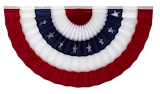



4th of July Bunting Decoration Ideas: Front Porch to Parade Route
Jun 18th 2026
4th of July bunting is a classic symbol of American celebration, adding patriotic color and a sense of unity to homes and public spaces. Many people decorate porch railings, entryways, and eaves with pleated fans, while cities use the same style along parade routes, lamp posts, and gathering spots.
With America’s 250th anniversary coming up, more people are looking for high-quality patriotic decorations. Durable and consistent bunting helps create memorable displays for big Independence Day celebrations.
The Heritage of the Pleated Fan
Patriotic bunting started out as maritime signal flags used to identify ships and naval groups. Later, it became a key part of American celebrations. The pleated fan design became popular because it creates balanced symmetry, texture, and bold color on porches, railings, and parade routes. Its semicircular shape makes the red, white, and blue stripes stand out and gives a nostalgic look that links today’s holidays to our history.
Bunting Materials: Real-World Use Cases
Different bunting materials work better in certain environments, depending on the weather, how long they’ll be up, and the look you want.
The most common materials are:
-
Poly-Cotton: Best suited for historic homes, museums, and indoor patriotic displays because it delivers a traditional appearance with rich texture and classic detailing. However, colors may bleed during heavy rain, and prolonged outdoor exposure can shorten the fabric's lifespan.
-
100% 200 Denier Nylon: Commonly used for parade routes, civic installations, and long-term outdoor displays because it offers strong UV resistance and dries quickly after storms. The main drawback is the higher cost compared to other materials.
When choosing a material, think about how long your display will be outside and how durable it needs to be. At Independence Bunting, we make sure every piece is high quality and ready for your event.
Major Decoration Strategies
Each patriotic setting needs its own bunting approach. Homes, parade routes, floats, and historical events all have different sizes, visibility needs, and weather conditions.
Residential: Transforming the Front Porch
Front porch bunting looks best when the fan size fits the width of your railing or entryway. On small porches, evenly spaced pleated fans work well. Larger porches can have layered displays on different levels. Many people also hang “drop” bunting under the eaves for a fuller patriotic look.
Additional decorative elements often include:
-
Door Wreath Coordination: Matching wreaths helps connect the bunting color palette with the entryway.
-
Consistent Spacing: Even spacing creates a cleaner and more balanced appearance.
-
Layered Placement: Combining railing fans with eave bunting adds visual depth.
Civic: Lining the Parade Route
Civic bunting needs to be easy to see along public streets and gathering spots. Organizers usually attach pleated fans to railings, lamp posts, barricades, and grandstands to create a continuous patriotic look.
Common civic installation techniques include:
-
Reinforced Fastening: Heavy-duty clips and zip ties improve stability during windy conditions.
-
Repeating Patterns: Matching bunting across several blocks strengthens visual consistency.
-
Elevated Placement: Higher positioning improves visibility for crowds and media coverage.
Mobile: Decorating Parade Floats
When decorating parade floats, it’s important to balance style with safety. Make sure the fabric stays clear of wheel wells, towing gear, and walkways to avoid any hazards.
Important safety and decorating considerations include:
-
Pleated Fans on Trailer Sides: Fans help frame signage and themed decorations while maintaining visual balance across the float.
-
Wind-Proof Fasteners: Reinforced mounting points prevent lifting and fabric movement during transportation.
-
Lightweight Materials: Nylon and poly-cotton fabrics create less drag and perform better in windy outdoor conditions.
Historical: The “Tea-Stained” Aesthetic
Tea-stained or antique-style bunting gives a softer, vintage look inspired by Revolutionary War celebrations. This style is great for museums, reenactments, historic homes, and America 250 events.
Vintage patriotic displays often include:
-
Muted Fabric Tones: Softened colors recreate the appearance of historic textiles.
-
Colonial Decor Pairing: Lanterns and wooden signage strengthen the historical atmosphere.
-
1776-Themed Installations: Antiqued bunting supports educational and heritage-focused events.
Installation Guidelines and Etiquette
Installing bunting properly keeps it looking good on Independence Day and helps prevent damage or safety issues.
At Independence Bunting, we use strong materials and focus on details. Homeowners, parade organizers, and civic planners often follow a few key steps to make bunting last longer and look its best.
Proper Orientation and “Blue-Up” Rule
The blue or starred part of patriotic bunting should always be at the top. This follows American display tradition and keeps the look consistent on porches, railings, parade routes, and public spaces.
Damage-Free Hanging Techniques
Many homeowners and event organizers now use surface-safe installation methods to protect exterior finishes during seasonal decorating.
Common hanging techniques include:
-
Siding Clips: Help secure bunting without creating holes in exterior siding.
-
Magnetic Hooks: Work well on metal railings and temporary civic installations.
-
Zip Ties: Provide additional stability for parade routes, lamp posts, and windy outdoor locations
Maintenance and Storage
Storing your bunting the right way helps it last for many holidays. Fold it along the pleat lines to avoid wrinkles and keep its shape. Clean it gently by hand, let it dry completely, and store it in a cool, dry place to prevent mildew and fading.
Conclusion
Whether you’re getting your porch ready for a family barbecue or planning a big city parade, the right bunting can turn any space into a lively celebration of American history. Choose durable materials, follow display traditions, and secure your decorations for a neat, lasting look. As we reach important milestones, these classic decorations do more than just look good, since they bring our communities together in pride.
FAQs
What is the difference between a flag and bunting?
A flag is an official national symbol, while bunting is decorative fabric used to enhance patriotic displays.
Can I leave my bunting up all year?
Most bunting is designed for seasonal use. Long-term outdoor exposure can fade colors and weaken fabric.
How many pleated fans do I need for a standard porch?
Most standard porch railings require three to five evenly spaced pleated fans for balanced coverage.
Is nylon or cotton better for outdoor bunting?
Nylon usually performs better outdoors because it resists moisture and UV exposure more effectively than cotton.
How do I get wrinkles out of pleated bunting?
Use low-heat steaming or gentle fabric pressing while preserving the original pleat lines to avoid flattening the fan shape.