





Red, White and Blue Bunting: How to Choose and Use It for American Celebrations
Sep 18th 2026
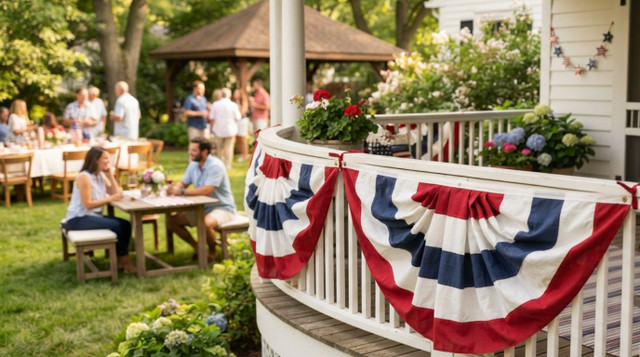
To display red, white, and blue bunting, place blue on top, white in the middle, and red at the bottom, as stated in 4 U.S.C. §8(d). The Flag Code says the U.S. flag should hang freely and be shown with respect. Bunting is for decoration, not a replacement for the flag, and is suggested for speakers' desks, platform fronts, and general decor.
What the Flag Code Says About Bunting
According to 4 U.S.C. §8(d), patriotic bunting should have blue on top, white in the middle, and red on the bottom. The Code also says bunting is the right material for decorative draping in certain places.
The Code gives clear rules for displaying bunting:
-
Color Arrangement: Place blue on top, white in the middle, and red on the bottom.
-
Decorative Uses: Hang bunting on a speaker's desk, along the front of a platform, or as general decoration.
-
Flag Display: Let the U.S. flag hang freely, and use bunting for decorative draping instead.
For most people, the Flag Code's rules without enforcement are meant as advice for showing respect.
Where to Hang Bunting and How
Bunting looks great on porches, platforms, storefronts, parade routes, and indoors. Think about placement, size, viewing height, and display conditions to keep the colors clear and lined up in each spot.
|
Location |
What to Consider |
What to Check |
|
Porch railing |
Measure the run and railing height |
Keep blue uppermost across the railing |
|
Balcony or platform front |
Plan coverage across the full width |
Keep sections evenly positioned |
|
Speaker’s desk or podium |
Follow the Code’s guidance for bunting |
Use bunting as the decorative drape |
|
Storefront or awning |
Consider exposure and display duration |
Match material to expected conditions |
|
Parade route and grandstands |
Measure the total multi-section run |
Maintain consistent color order throughout |
|
Interior halls and stages |
Consider lighting and camera visibility |
Align overlaps to preserve color bands |
For bigger spaces, check your measurements against the section size listed for red, white, and blue bunting before choosing how many sections you need. The Flag Code’s color order stays the same for all locations.
How Much Bunting You Actually Need
To figure out how much bunting you need, measure the full length you want to cover. Then add 15% for the drape or swag, plus extra for corners and returns. This gives you the right amount for your space and setup without running short.
Use these three measurements when planning your display:
-
Straight Runs: Measure the full distance from the starting point to the end of the display area.
-
Corners and Returns: Add the distance required for each corner and any return that continues along another surface.
-
Drape and Swag Allowance: Add 15% to your total to account for the drape or swag effect. Bunting is rarely hung flat, and this extra material ensures proper coverage and a full, even appearance.
Section Overlap: Decide how adjoining sections will meet and include the planned overlap in your total measurement.
Check the section width on the relevant product page before ordering to calculate how many sections suit your measured run and preferred arrangement. These measurements provide a practical estimate based on your specific display area.
Choosing Material for Indoor and Outdoor Use
Choose bunting material based on the display location, duration, and desired appearance. For most displays, the two main options are nylon and cotton, and each performs best in different settings.
-
Nylon bunting is the better choice for outdoor use, especially for longer periods. Nylon is durable, resists fading, dries quickly, and holds up well against sun, rain, and wind. It keeps its color and structure through extended outdoor exposure, making it ideal for porches, storefronts, parade routes, and any display that stays up for more than a few days.
-
Cotton bunting is better suited for indoor use. Cotton offers a classic, traditional look with a soft drape that works well in halls, stages, auditoriums, and formal interior settings. It displays rich color under indoor lighting and photographs beautifully. Because cotton is more susceptible to moisture, fading, and mildew, it is not the best choice for sustained outdoor display.
Consider these three settings when choosing your material:
-
Sustained Outdoor Exposure: Choose nylon bunting, which is made for ongoing outdoor display and holds up against expected weather conditions.
-
Short-Term Outdoor Use: Nylon also works well for temporary celebrations, offering durability and easy care even for brief outdoor events.
-
Indoor Display: Choose cotton bunting when you want a traditional look with soft drape, rich texture, and colors that read well under interior lighting.
Matching the material to its intended setting supports a consistent display. In contrast, memorial and mourning displays may call for material choices suited to their setting and purpose, as covered in our related memorial bunting guide.
Myths vs. Facts About Bunting
Several familiar ideas about patriotic decorating become clearer when compared with the Flag Code. These distinctions help explain bunting and U.S. flag display guidance.
|
Myth |
Fact |
|
Bunting goes red side up |
The Code places blue above, white middle, red below |
|
Bunting and the flag follow identical guidance |
The Code addresses them separately |
|
A flag serves as railing drapery |
The Code identifies bunting for decorative draping |
|
Flag Code guidance carries homeowner penalties |
Most provisions are advisory for private citizens |
|
Color order is optional for bunting |
Section 8(d) specifies blue, white, then red |
These distinctions make it easier to plan patriotic decorations while keeping bunting separate from U.S. flag displays.
About Independence Bunting & Flag
Independence Bunting & Flag was started in 2005 by Keith Feuer and runs its own factory in Deer Park, New York. The bunting fabric is stitched and hemmed with two rows of stitching. The company makes bunting, flags, pleated fans, pull-down banners, and other decorations at its Deer Park location for patriotic and seasonal displays.
Conclusion
A good patriotic bunting display uses the right color order, careful measurements, proper placement, and the best material for the setting. Measure your space before ordering, add 15% for drape and swag, think about where you'll hang the bunting, and choose nylon for outdoor use or cotton for indoor displays. These steps help your display look great on porches, storefronts, platforms, event spaces, and indoors. Check out Independence Bunting & Flag's collection for options.
FAQs
Which way up does red, white, and blue bunting go?
Place blue above, white in the middle, and red below, following the arrangement specified in 4 U.S.C. §8(d).
Can you drape an American flag over a railing instead of bunting?
The Flag Code states that the flag should fall free and identifies bunting for decorative draping instead.
Is the Flag Code actually a law?
The Flag Code is federal law, while provisions without enforcement mechanisms generally serve as advisory guidance for private citizens.
How much bunting do you need for a porch?
Measure the full porch run, add 15% for drape or swag, account for corners and returns, then check the selected bunting's dimensions.
Can bunting be left outside?
Yes, if you choose the right material. Nylon bunting is designed for outdoor use and holds up well over longer periods. Cotton bunting is better suited for indoor displays.