






Made in America Flags: What Does "Made in USA" Really Mean?
Sep 18th 2026
Made in America flags carrying an unqualified “Made in USA” claim follow a federal standard regulated by the Federal Trade Commission (FTC). Under the Made in USA Labeling Rule, the FTC requires that almost all parts and processing occur in the United States. This means the final assembly, all major processing, and nearly all components must be made and sourced domestically. These standards also help buyers evaluate origin claims when researching USA-made bunting and other patriotic textile products.
What "Made in USA" Legally Means
Under the FTC’s Made in USA Labeling Rule, 16 C.F.R. Part 323, an unqualified claim means a product is all or virtually all made in the United States. The rule applies to covered Made in USA labels, including qualifying labels in catalogs and online materials.
An unqualified claim must meet these three conditions:
-
Final Assembly or Processing: Final assembly or processing takes place in the United States.
-
Significant Processing: All significant processing involved in making the product occurs in the United States.
-
Component Sourcing: All or virtually all ingredients or components are made and sourced in the United States.
These rules set the federal standard for an unqualified Made in USA label. The FTC also looks at the overall context of advertising, such as words, images of US flags, maps, and other symbols, when judging if a product is truly US-made.
Qualified and Unqualified Claims Compared
A qualified claim gives more specific details about where a product comes from, while an unqualified claim means the product meets the federal Made in USA standard. Knowing the difference helps buyers better understand sourcing and manufacturing details.
|
Claim Type |
What It Means |
What To Ask |
|
Unqualified “Made in USA” |
All three federal conditions are met |
Where are the components sourced? |
|
“Assembled in USA” |
Final assembly occurs in the US |
Which components come from each source? |
|
“Made in USA of US and imported materials” |
A qualified claim describing mixed sourcing |
Which materials are sourced domestically? |
|
“American company” or “American owned” |
Describes the business rather than product origin |
Where is the product manufactured? |
|
Flag or map imagery |
Context may communicate an origin claim |
Is written origin information available? |
When sellers clearly explain where materials come from and where products are made, buyers can tell the difference between business ownership, assembly location, and product origin. This information helps buyers judge Made in USA claims more easily.
How to Check a Seller’s Claim
To check if a product is truly Made in USA, buyers should ask sellers clear questions about the materials, parts, how the product is made, and which products the claim covers. Honest answers show how the claim fits the finished product.
Key questions to ask include:
-
Fabric Origin: Ask where the fabric is woven and dyed. A clear answer identifies the relevant production locations.
-
Component Sourcing: Ask where thread, headers, fasteners, grommets, and other components are sourced.
-
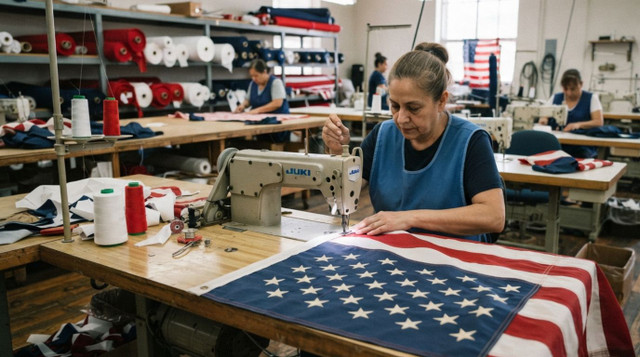
Final Sewing: Ask where sewing, finishing, and final assembly take place. A useful answer identifies each applicable location.
-
Range Coverage: Ask whether the claim covers the full range or specific products. A clear response defines its scope.
Knowing these details helps buyers judge if a product’s origin claim is accurate. The FTC also offers more guidance about what counts as a US-origin claim.
Why This Matters for Flags and Bunting Specifically
Accurate origin information matters for Made in America flags because patriotic products often carry associations with U.S. manufacturing. Clear sourcing details help buyers understand how materials, production stages, and product-specific origin claims relate.
Three points are especially relevant:
-
Fabric and Thread: Fabric and thread may come from different sources than the facility handling cutting, sewing, and finishing.
-
Product Range: Sellers might have different sourcing for different products, so it helps buyers when they get specific origin details for each item.
-
Federal Procurement: Certain Department of Defense purchases of American flags follow DFARS 252.225-7006, which requires covered flags, including their materials and components, to be manufactured in the United States.
Federal procurement rules apply in certain government contracts, while the FTC’s standards cover Made in USA claims for regular buyers.
Myths vs. Facts About Made in USA Claims
Knowing the difference between where a business is based, where a product is put together, where parts come from, and what origin claims mean helps buyers better understand manufacturing details.
|
Myth |
Fact |
|
Made in USA is simply marketing language |
Federal rules govern covered unqualified labels |
|
US assembly equals full US origin |
Assembly forms one part of the standard |
|
Qualified claims offer less value |
Qualification can provide precise sourcing information |
|
American ownership establishes product origin |
Ownership and product manufacturing are separate |
|
US imagery only serves a decorative purpose |
Context can communicate an implied origin claim |
These differences give buyers a useful way to judge the information they see about flags, bunting, and similar products.
About Independence Bunting & Flag
Independence Bunting & Flag is based in Deer Park, New York. We offer flags, bunting, pleated fans, and other decorations for patriotic, holiday, memorial, and special events.
We are a GSA Multiple Award Schedule contractor. If you need details about where our products are made or how they’re put together, we’re happy to provide that information.
Conclusion
An unqualified Made in USA claim means the product’s final assembly, all major processing, and almost all parts are made in the United States. Qualified claims are also allowed and usually give more details about where parts come from. If you have questions about a specific product, contact the Independence Bunting & Flag team.
FAQs
What does "Made in USA" legally mean?
An unqualified claim requires US final assembly, significant processing, and all or virtually all components made and sourced domestically.
Is "Assembled in USA" the same as "Made in USA"?
“Assembled in USA” concerns substantial U.S. assembly, while unqualified “Made in USA” also requires significant processing and component sourcing.
Are qualified Made in USA claims useful for buyers?
Qualified claims provide specific information about US content or processing, helping buyers understand a product’s manufacturing and sourcing.
How can I check whether a flag is made in America?
Check where fabric is woven and dyed, where components are sourced, where final sewing occurs, and which products the claim covers.
Does an American-owned company mean American-made products?
American ownership describes the business, while a Made in USA claim concerns the product's origin and processing.